
Urgent Care vs. Emergency Room: Where Should You Go (and When It Matters Most)
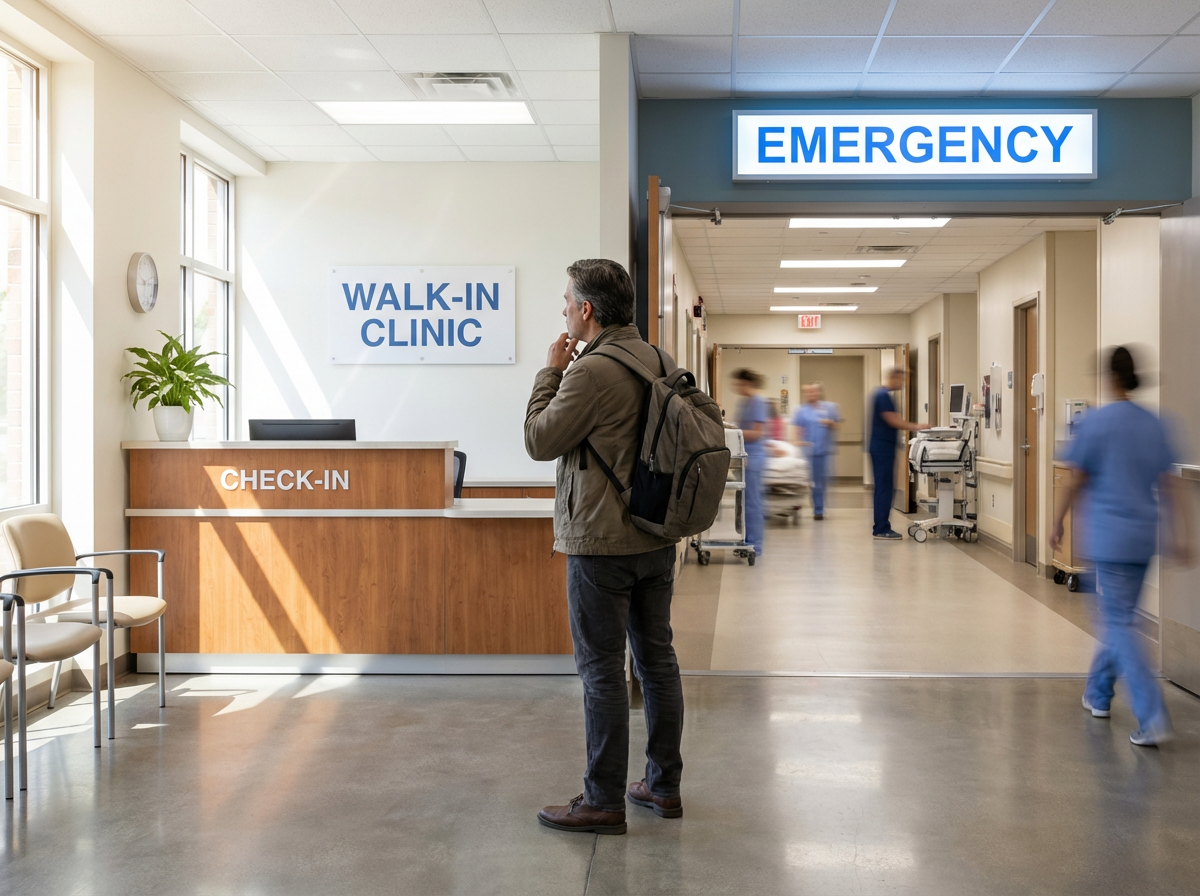
When you’re sick or injured, the hardest part is often not the pain—it’s the decision.
Do you head to urgent care? Go straight to the emergency room? Wait it out and call your primary care doctor tomorrow?
In the moment, it’s easy to second-guess yourself. And let’s be honest: most people don’t want to overreact… but they also don’t want to miss something serious.
This guide breaks down the real differences between urgent care and the ER, what each is best for, and a simple way to decide where to go—especially when it matters most.
The Big Difference: What Each Place Is Built to Handle
Here’s the simplest way to think about it:
- Emergency Room (ER): built for life-threatening conditions and severe trauma. It has the highest level of emergency resources available 24/7.
- Urgent care: built for non-life-threatening illnesses and injuries that still need same-day attention.
Both are important. They just serve different situations.
For a helpful overview of emergency symptoms, the American College of Emergency Physicians has guidance on when to seek emergency care: https://www.acep.org/patient-care
When the ER Is the Right Choice (Don’t Wait)
If you suspect a life-threatening emergency, call 911 or go to the ER immediately.
Common examples include:
- Chest pain or pressure (especially with shortness of breath, sweating, nausea, or pain radiating to the arm/jaw)
- Trouble breathing or severe asthma attack
- Signs of stroke (face drooping, arm weakness, speech difficulty)
- Severe bleeding that won’t stop
- Major head injury or loss of consciousness
- Seizure (especially first-time seizure)
- Severe allergic reaction with swelling of the face/throat or trouble breathing
- Severe burns or deep wounds
- Serious trauma (car accident, fall from height)
- Severe abdominal pain that is sudden or worsening
If you want a clear list of warning signs, the American Heart Association’s information on heart attack symptoms is a strong reference: https://www.heart.org/en/health-topics/heart-attack/warning-signs-of-a-heart-attack
And for stroke symptoms, the CDC’s stroke page is a reliable resource: https://www.cdc.gov/stroke/signs_symptoms.htm
Rule of thumb: If you’re worried something could be life-threatening, the ER is the safest choice.
When Urgent Care Is the Better Fit (Fast Care Without the ER Hassle)
Urgent care is designed for problems that are uncomfortable, disruptive, or potentially worsening—but not immediately life-threatening.
Common reasons people choose urgent care include:
Illnesses
- Cold/flu symptoms
- Sore throat or suspected strep
- Ear infections
- Sinus infections
- Mild to moderate asthma symptoms (without severe breathing distress)
- Urinary tract infections (UTIs)
- Nausea/vomiting/diarrhea (mild to moderate dehydration risk)
- Minor allergic reactions (no airway swelling)
MedlinePlus is a good general medical reference for common conditions like UTIs and sore throats: https://medlineplus.gov/
Injuries
- Sprains and strains
- Minor fractures (when the limb is stable and circulation is intact)
- Minor cuts that may need stitches
- Minor burns
- Sports injuries
Other same-day needs
- X-rays (when available)
- Basic lab testing (when available)
- Work/school physicals (depending on the clinic)
Why it matters: Urgent care can often get you treated faster and at a lower cost than the ER for these types of issues.
The “When It Matters Most” Decision: A Simple Checklist
If you’re unsure where to go, run through these questions.
1) Is this potentially life-threatening?
If yes → ER.
Examples: chest pain, severe shortness of breath, stroke symptoms, uncontrolled bleeding, severe head injury.
2) Is the pain severe or rapidly worsening?
If yes → ER (or call 911 if severe).
3) Is there a risk of permanent harm if you wait?
If yes → ER.
Examples: suspected stroke, severe allergic reaction, severe dehydration, signs of sepsis.
The CDC’s sepsis information is a helpful reference for warning signs: https://www.cdc.gov/sepsis/
4) Can you safely walk, talk, and breathe normally?
If yes, and the issue is still urgent → urgent care is often appropriate.
5) Do you need same-day care but not emergency-level resources?
If yes → urgent care.
What About Primary Care?
Primary care is ideal for:
- Ongoing chronic conditions
- Preventive care
- Medication management
- Non-urgent symptoms that can wait
But primary care isn’t always available same-day, and many offices have limited evening/weekend hours.
That’s where urgent care fills the gap.
Healthcare.gov has a good overview of the role of primary care and preventive services: https://www.healthcare.gov/preventive-care-adults/
Common Scenarios (So You Don’t Have to Guess)
Here are quick examples that cover the most common “Should I go to urgent care or the ER?” moments.
Scenario: You twisted your ankle and it’s swollen
- Urgent care is often appropriate for evaluation, possible X-ray, and treatment.
- ER if there’s severe deformity, bone protruding, or you can’t feel your foot/toes.
Scenario: Your child has a fever and sore throat
- Urgent care can evaluate and test for strep/flu/COVID (depending on availability).
- ER if there are signs of severe dehydration, difficulty breathing, or lethargy that concerns you.
The American Academy of Pediatrics has guidance on fever in children that can help parents decide when to seek urgent care: https://www.healthychildren.org/
Scenario: You have chest tightness and shortness of breath
- ER. Always.
Scenario: You think you have a UTI
- Urgent care is often a good fit for evaluation and treatment.
- ER if you have high fever, severe back pain, vomiting, or signs of a kidney infection.
Scenario: You cut your hand while cooking
- Urgent care if bleeding is controlled and you may need stitches.
- ER if bleeding won’t stop, the wound is deep with visible tissue, or you have numbness (possible nerve damage).
Why People End Up in the ER When Urgent Care Would Work
This happens for a few reasons:
- Fear of “missing something”
- Not knowing what urgent care can treat
- Not having a primary care doctor
- After-hours needs
The result is often:
- Longer wait times
- Higher costs
- A stressful experience for a problem that could have been handled elsewhere
That’s not a knock on ERs—they’re essential. It’s just that they’re built for a different level of urgency.
A Quick Note on Cost and Wait Time
Costs vary widely, but in general:
- ER visits are typically significantly more expensive than urgent care for non-emergency issues.
- ER wait times can be longer, especially when your condition is not life-threatening (because the sickest patients are seen first).
If you want a deeper look at how ER triage works, the Agency for Healthcare Research and Quality (AHRQ) has patient-focused resources: https://www.ahrq.gov/patients-consumers/index.html
Bottom Line: Choose the Right Level of Care
If you remember nothing else, remember this:
- Go to the ER for anything that could be life-threatening or rapidly worsening.
- Choose urgent care for same-day illnesses and injuries that need attention but aren’t emergencies.
And when you’re not sure—err on the side of safety.
Need Same-Day Care? Visit Care Station Medical
If you’re dealing with a non-life-threatening illness or injury and you need care today, Care Station Medical is here to help.
Our urgent care team can evaluate symptoms, provide treatment, and help you understand what to do next—without the stress and cost of an unnecessary ER visit.
Call or stop in today to get the care you need, when you need it.