
The Rise of At-Home Health Monitoring: When Should You Still See a Doctor?
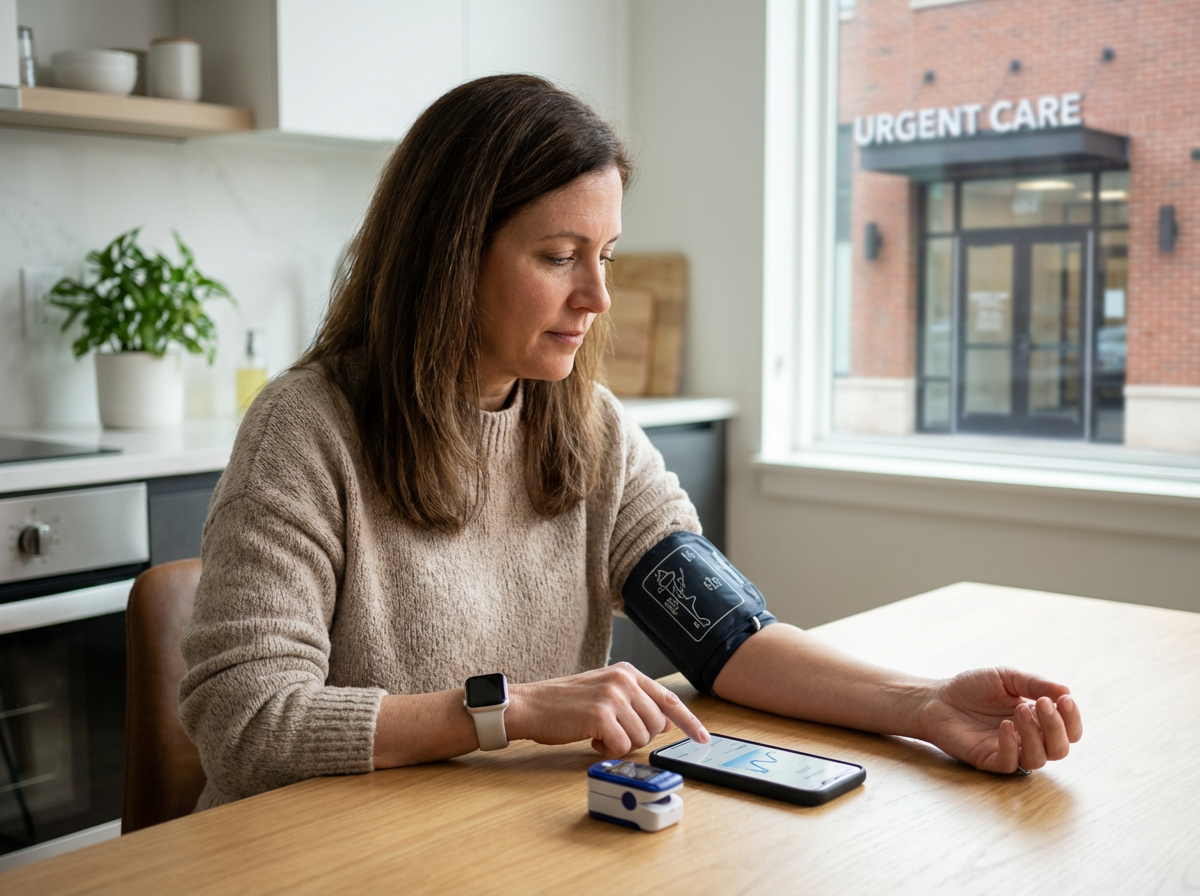
Smartwatches that track your heart rate. Blood pressure cuffs that sync to your phone. Finger-prick glucose monitors. Pulse oximeters you can buy at the pharmacy. Even smart scales that estimate body fat and hydration.
At-home health monitoring has exploded and in a lot of ways, its a good thing. When people can see trends in real time, they are more likely to notice changes early, take symptoms seriously, and have better conversations with a provider.
But here’s the catch: numbers don’t diagnose you. And sometimes, home devices create the opposite of peace of mind they create confusion, false alarms, or a dangerous delay in getting care.
So how do you use at-home monitoring the right way? And when should you stop watching the app and go get checked out?
This guide breaks it down with practical, real-world examples so you know when urgent care is the smart next step.
Why at-home monitoring is rising (and why it’s not going away)
There are a few big reasons more people are tracking their health at home:
- Convenience: You can check a number in seconds.
- Chronic condition management: Hypertension, diabetes, asthma, and heart disease often require ongoing tracking.
- Post-COVID awareness: People became more familiar with pulse oximeters, fevers, and respiratory symptoms.
- Wearable tech: Smartwatches now track heart rhythm, sleep, and activity.
The FDA has a helpful overview on how to think about at-home medical devices and what accuracy really means: https://www.fda.gov/medical-devices
The biggest benefit: trends (not one-off readings)
At-home monitoring shines when it helps you spot patterns:
- Your blood pressure is creeping up over weeks.
- Your fasting glucose is trending higher.
- Your oxygen levels drop when you’re sick.
- Your heart rate is unusually high during normal activity.
Those trends can be incredibly useful for a provider.
But the flip side is also true: a single weird reading can be meaningless if the device is off, the cuff is the wrong size, you’re dehydrated, you just had caffeine, or you’re anxious.
That’s why the American Heart Association emphasizes proper technique for home blood pressure monitoring (cuff fit, posture, timing): https://www.heart.org/en/health-topics/high-blood-pressure/understanding-blood-pressure-readings/monitoring-your-blood-pressure-at-home
Common at-home monitors and what they can (and can’t) tell you
1) Blood pressure cuffs
Helpful for: spotting hypertension trends, medication monitoring, stress-related spikes.
Limitations: wrong cuff size, poor positioning, talking during readings, or checking right after activity can skew results.
Go to urgent care if:
- You have very high readings with symptoms (chest pain, shortness of breath, severe headache, weakness, vision changes).
- You’re repeatedly getting extremely high numbers and feel unwell.
2) Pulse oximeters (SpO2)
Helpful for: monitoring respiratory illness, asthma/COPD flares, shortness of breath.
Limitations: cold hands, nail polish, poor circulation, movement, and device quality can affect accuracy.
The FDA has guidance on pulse oximeter limitations and factors that impact readings: https://www.fda.gov/medical-devices/safety-communications/pulse-oximeter-accuracy-and-limitations-fda-safety-communication
Go to urgent care if:
- You’re short of breath, wheezing, or struggling to speak full sentences.
- Your oxygen readings are low and you feel worse (dizziness, confusion, blue lips, chest tightness).
3) Thermometers
Helpful for: tracking fever patterns during infections.
Limitations: technique matters (oral vs ear vs forehead), and some devices are less reliable.
Go to urgent care if:
- Fever is persistent, high, or paired with concerning symptoms (stiff neck, severe dehydration, worsening cough, severe sore throat, rash, confusion).
4) Glucose monitors
Helpful for: diabetes management, identifying hypoglycemia/hyperglycemia patterns.
Limitations: meter accuracy varies; timing and technique matter.
The CDC has a solid overview of diabetes basics and monitoring: https://www.cdc.gov/diabetes/basics/index.html
Go to urgent care if:
- You have symptoms of very high or very low blood sugar (confusion, fainting, severe weakness, vomiting, dehydration).
5) Smartwatches (heart rate, rhythm alerts)
Helpful for: noticing unusual heart rate trends, activity intolerance, possible irregular rhythm alerts.
Limitations: wearables are screening tools, not diagnostic devices. False positives happen.
Go to urgent care if:
- You have palpitations with dizziness, chest pain, fainting, or shortness of breath.
- Your heart rate is persistently very high at rest and you feel unwell.
When at-home monitoring is not enough: the red flag rule
Here’s a simple way to decide:
If you have a concerning symptom, don’t let a device talk you out of getting care.
Numbers are data. Symptoms are your body waving a flag.
Red flags that should override your app
Seek urgent care (or emergency care when severe) if you have:
- Chest pain or pressure
- Trouble breathing or worsening shortness of breath
- Fainting, severe dizziness, or confusion
- Weakness/numbness on one side, facial droop, trouble speaking
- Severe headache unlike your usual
- Persistent vomiting or signs of dehydration
- High fever that isn’t improving or is paired with severe symptoms
- A wound that may need stitches, is infected, or won’t stop bleeding
If you’re not sure whether symptoms are urgent, it’s better to be evaluated than to wait.
When urgent care is the right move (even if your numbers look fine)
At-home monitoring can miss problems that require a physical exam, testing, or imaging.
Urgent care is often the right fit when you need answers today not in three weeks.
You should consider urgent care when you need:
- A clinical exam for respiratory symptoms (listening to lungs, checking for wheezing)
- Rapid testing (flu, COVID-19, strep)
- Evaluation for UTI symptoms
- Assessment of dehydration or persistent GI symptoms
- X-rays for injuries (sprain vs fracture)
- Wound care (cuts, burns, possible infection)
- Evaluation of persistent fever or worsening symptoms
MedlinePlus has a helpful overview of urgent care and when it’s appropriate: https://medlineplus.gov/ency/patientinstructions/000593.htm
How to bring your at-home data to urgent care (so it actually helps)
If you come in, your home readings can be useful if they’re organized.
Bring:
- A screenshot or log of readings (dates + times)
- Notes on symptoms (what you felt and when)
- Any meds/supplements you’re taking
- Device type/brand if you know it
And remember: we’ll confirm key readings with clinical-grade equipment when needed.
The bottom line: at-home monitoring is a tool not a safety net
At-home health monitoring is empowering when it helps you:
- notice trends
- take symptoms seriously
- communicate clearly with a provider
But it becomes risky when it leads to:
- ignoring symptoms because the number looks okay
- panicking over one odd reading
- delaying evaluation when something is clearly getting worse
If you’re unsure, getting checked out is usually the fastest way to get clarity.
Need a same-day evaluation? Care Station Medical can help.
If your at-home readings are concerning or your symptoms don’t match what your device is telling you don’t guess.
Care Station Medical provides urgent care evaluation and treatment for a wide range of symptoms and injuries, with a focus on clear answers and practical next steps.
Contact Care Station Medical today to get seen and get peace of mind.